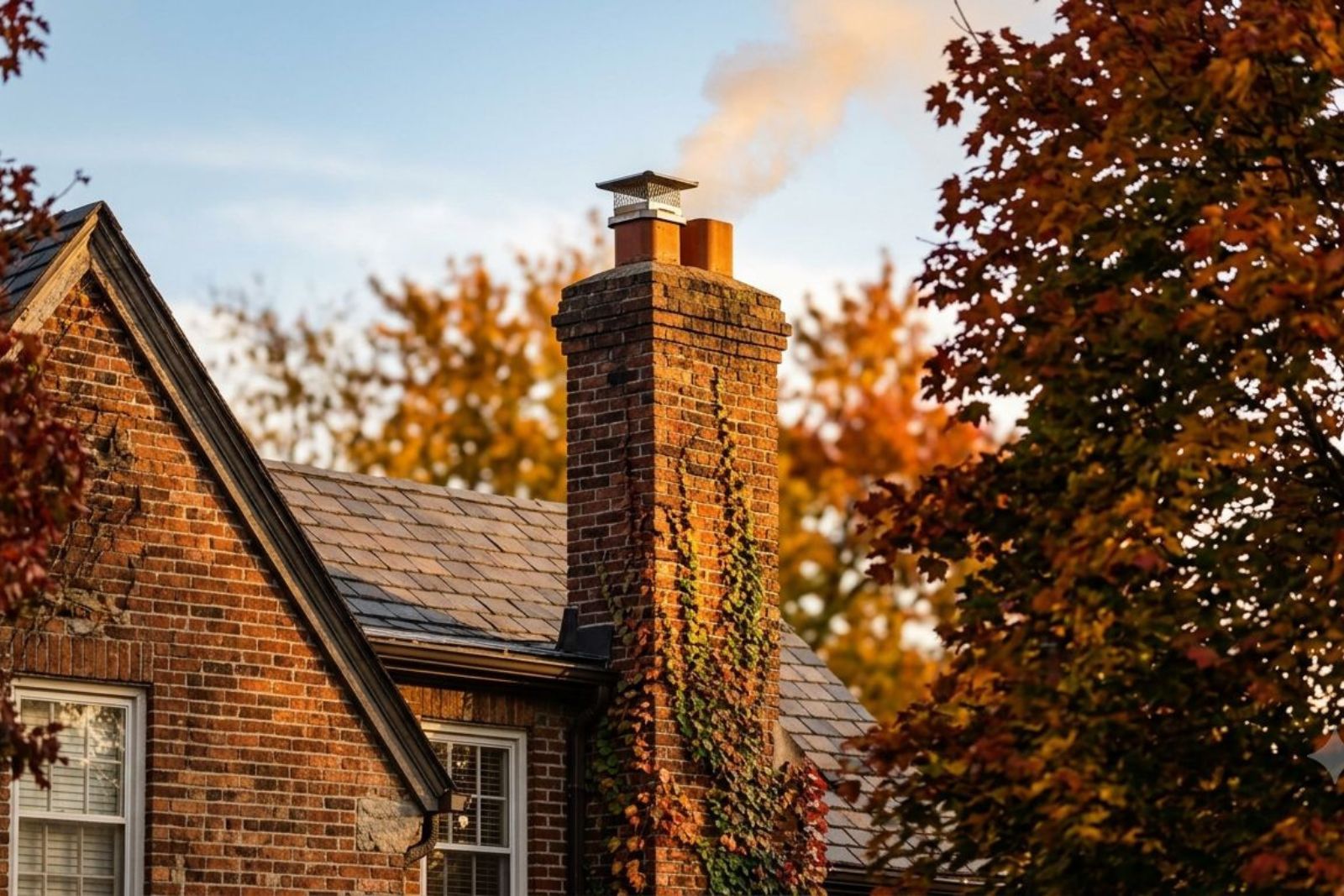
If your home has an older chimney, you may be wondering whether it can be repaired or if it needs to be completely rebuilt. The good news is that many old chimneys can be repaired, often at a fraction of the cost of replacement.
Depending on what is going to be connected to the chimney, you’ll have a couple of options for restoring safety, improving performance and extending the life of the chimney. Keep reading to learn more and to find out how to go about getting your chimney evaluated.
CHIMNEY LINER OR FLUE
When we talk about repairing a chimney, we really need to discuss the chimney flue or liner. Think of the exterior brick, block or stone that is seen from the ground. This part of the chimney actually serves as a conduit or the housing for the chimney flue or liner. The function of a chimney flue is to simply contain and route all the by-products of combustion from the fireplace or stove to atmosphere.
Most older masonry chimney flues are made from ceramic clay tiles. These tiles are normally 24” in length, connected with mortar at the time the chimney was originally built. They protect the integrity of the brick or block chimney structure and carry combustion by-products out of the house. However, both the mortar joints and the clay tiles will deteriorate over time because of the high flue temperatures, moisture, creosote and extreme weather conditions.
A damaged flue tile can allow combustible gases to infiltrate a house and excessive heat to reach surrounding framing members. Broken or missing flue tiles are a serious situation. If left unchecked, lives and property could be threatened.
WHO DETERMINES A CHIMNEY’S CONDITION?
So, who’s best equipped to evaluate a chimney and how often should it be done? A certified professional has the proper training, experience and tools necessary to determine the condition of your chimney.
The National Fire Code of Canada states that every chimney, flue and flue pipe shall be inspected annually to identify any dangerous condition. Look for credentials from WETT. A certified inspector will be aware of these requirements and will assess compliance with safety standards and relevant codes.
In the USA, the National Fire Protection Association Standard (NFPA 211) declares the same: a chimney is to be inspected annually and cleaned if needed. Frequently, cleaning the chimney is necessary before a thorough inspection can be performed. A certified chimney sweep in the United States has qualifications from the CSIA.
Remember, there may be state, provincial and/or local codes in effect where you live. Another good reason to rely on the expertise of a qualified chimney pro: they’ll be up to date on the appropriate requirements and codes in your area. Don’t guess about the condition of your chimney. Know for sure. Your loved ones and property are certainly worth it.
WHY DO OLD CHIMNEYS FAIL?
Some chimneys may last over 50-75 years. But years of exposure to heat, moisture, creosote and the weather will eventually take their toll. Poor maintenance habits also play a significant role in the condition of a chimney. Common problems include:
- Cracked clay flue tiles
- Deteriorating mortar joints
- Spalling or flaking bricks
- Water damage
- Chimney crown deterioration
- Rusted fireplace and chimney components
- Unsafe or oversized flues
- Structural movement
Fortunately, many of these issues can be addressed without major surgery that would mean tearing down the entire chimney.
It’s worth noting that the deterioration in a masonry chimney is from the inside out. So, if you’re seeing problems with the brick or stone on the outside, bet heavy that there are issues on the inside of the chimney with the flue tiles. It’s definitely time to call in a professional.
With that being said, let’s look at the most common repair options available today.
CAST-IN-PLACE LINERS
If you plan to continue to burn wood on a grate in an open masonry fireplace, removing the old tile liner and installing a new cast-in-place liner might be your best bet. This process involves literally pulverizing the old clay tile into small pieces and physically removing it from the chimney. Based on the dimensions of the fireplace opening, a specifically sized form or bladder, (for example a 6” or 8” round form) is positioned in the chimney. Then an insulated, mortar-like mix is poured around the form.
The result is a perfectly sized, insulated liner for your fireplace that also improves the structural integrity of the brick, block or stone chimney structure. Other advantages of removing a ceramic clay tile liner and replacing it with a cast-in-place solution are:
- Adapts well to irregular masonry flues
- Strengthens the entire chimney structure
- Improves insulation and reduces clearance requirements
- Creates an improved smooth draft path
- Extends chimney structure life
- Meets many modern code requirements
- Highly durable
- Excellent heat resistance
STAINLESS STEEL LINERS
One of the most common chimney repairs involves installing a stainless steel chimney liner. This is the preferred solution if you’re planning to install:
- A wood-burning insert
- A freestanding wood stove
- A pellet insert or stove
A stainless steel liner is often installed with a special type of heat resistant insulation. It’s a ceramic fiber material that will enhance the performance of the insert or stove. Insulated stainless steel liners are particularly beneficial in colder climates because they keep flue gases warmer, helping maintain strong draft and reducing condensation inside the chimney.
A properly sized stainless steel liner offers many other advantages:
- Improved draft
- Reduces creosote buildup
- Increases heating efficiency
- Meets modern building codes
- Provides excellent corrosion resistance
- Extends chimney life
- Reduces smoke spillage
- Improves appliance performance
Most stainless liners are 24 gauge and available in either 304 or 316 stainless steel. Ideally, the liner should be the same size as the flue collar on the wood burning insert or stove. Most inserts and stoves today are made with a 6” flue collar and will use a 6” liner.
Flexible stainless steel liners work well in chimneys with offsets, while rigid liners are often used in straight chimneys. It’s common that a combination of both flexible and rigid stainless pipes is used in many projects.
So how do you as a homeowner sort out which type of liner is necessary? As we discussed earlier, the first thing to do and the key is having your chimney professionally evaluated to determine the condition of the chimney structure, tile flue liner, crown and chimney cap.
Look for professional credentials:
In the United States
In Canada
These specialists will have the training, experience, continuing education and equipment that elevates them from those companies that don’t have any recognized qualifications.
PELLET INSERTS AND STOVES
Pellet appliances produce lower flue temperatures than traditional wood-burning fireplaces, but they still require a properly sized stainless steel vent pipe. Remember, you’re still burning wood. It’s pelletized wood that’s burned under controlled conditions, but the requirement for venting is stainless steel, never aluminum.
Older masonry chimneys are usually much larger than necessary, allowing exhaust gases to cool too quickly. We mentioned that six inch is a common flue collar size for wood burning stoves and inserts, but pellet appliances will have a smaller flue collar, normally either three or four inch.
Installing a stainless steel liner sized specifically for a pellet insert or stove offers numerous advantages:
- Better combustion
- Improved efficiency
- Less ash accumulation
- Easier cleaning
- Reduced condensation
- Better appliance reliability
Again, most manufacturers will want the liner to match the size of the flue collar on the equipment.
We should note that pellet stoves can also be vented out a side-wall or up through the ceiling with a rigid pellet vent pipe. But if the stove is going to be vented into an existing chimney flue, it’s always best to install the appropriately sized, flexible stainless steel liner in the chimney.
ALUMINUM CHIMNEY LINERS
Not every insert or stove requires a stainless steel liner. When venting natural or LP gas inserts, aluminum liners are installed in the existing chimney. Because gas appliances produce much lower exhaust temperatures than their wood-burning relatives, aluminum venting is used to safely handle gas applications and will satisfy code requirements.
Aluminum liners differ from stainless steel and offer several benefits:
- Lightweight
- Lower cost
- Corrosion resistant for gas applications
- Easy installation
- Excellent flexibility
- Proper sizing for modern gas inserts
It is important to note that aluminum liners should never be used for wood-burning appliances, pellet stoves, coal appliances or oil-burning equipment. Always follow both manufacturer specifications and local building codes when selecting liner materials. Better yet, let the professionals handle it.
ZERO CLEARANCE FIREPLACE CHIMNEYS
Tens of thousands of homes built in the 70s and beyond installed factory-built zero clearance (ZC) fireplaces instead of a traditional masonry built, open burning fireplaces.
These types of fireplaces use an engineered chimney system rather than a brick or block chimney with a ceramic clay tile flue. ZC fireplace chimneys are usually a large rigid pipe, 12” or 14” in diameter, with an 8” or 10” stainless steel pipe in the center. Over time, these chimney systems may require repairs or replacement.
Common issues with this type of system include:
- Rusted chimney pipe
- Damaged chimney caps
- Corroded storm collars
- Deteriorated flashing
- Worn chimney supports
- Damaged termination caps
- Water leaks
- Fire damage
Unlike masonry chimneys, factory-built chimneys use components that are tested as a complete system. These chimney systems twist-lock together differently. Brand A is not compatible with Brand B or Brand C. Because of this, individual replacement parts must be the same brand of pipe, from the same manufacturer to ensure a correct seal between pipe components.
Due to the age of these fireplaces and because some manufacturers have stopped production or gone out of business, replacing old ZC fireplace chimneys can be difficult. In cases like this, the best choice might be a total tear-out. That is, physically removing the old fireplace and chimney and installing a new wood (or gas) model in its place. This can be an involved project, but the end result is a huge improvement to your home.
WHEN IS REPLACING A MASONRY CHIMNEY NECESSARY?
Many masonry chimneys can be repaired. But there can be situations where replacing it may be a better option. A complete rebuild could be recommended when:
- The chimney is leaning
- Structural failure has occurred
- Extensive freeze-thaw damage exists
- Large sections have collapsed
- Fire damage has severely weakened the structure
- Repair costs approach replacement costs
A professional evaluation can help determine if restoring or replacing offers the best long-term value.
WHY PROFESSIONAL INSPECTION MATTERS
Chimneys are more complicated than they appear from the outside. Problems hidden inside the flue may not be visible from the roof or fireplace opening. A certified chimney technician can inspect:
- Flue condition and integrity
- Chimney structure
- Moisture damage
- Draft performance
- Appliance compatibility
- Clearance to combustibles
- Proper sizing
Many inspections include video scanning equipment that allows a technician to find hidden cracks or deterioration. Hire a professional with industry qualifications and experience. Not doing so is just too risky.
THE BOTTOM LINE
An old masonry chimney doesn’t necessarily mean it’s time for demolition. In some cases, modern repair techniques can restore decades of safe, reliable service while preserving the character and beauty of your home. In other cases, it might make more sense to spend the money on replacing what’s in your living room with new wood, gas or pellet equipment.
Whether your project involves installing a stainless steel liner for a wood-burning stove, restoring a damaged masonry chimney with a cast-in-place system, installing an aluminum liner for a gas fireplace insert or replacing stainless steel chimney components on a factory-built zero clearance fireplace, odds are, you’ll have options.
Remember that Step 1 is always to schedule a professional chimney inspection. An experienced hearth professional will evaluate the condition of your chimney, recommend the most appropriate repair method and ensure your fireplace, stove or insert works safely and efficiently for years to come.
Investing in timely chimney repairs not only protects your home and family but also improves heating performance, reduces maintenance costs and preserves one of your home’s most valuable and enjoyable features: a warm, safe fire for your family to enjoy.